


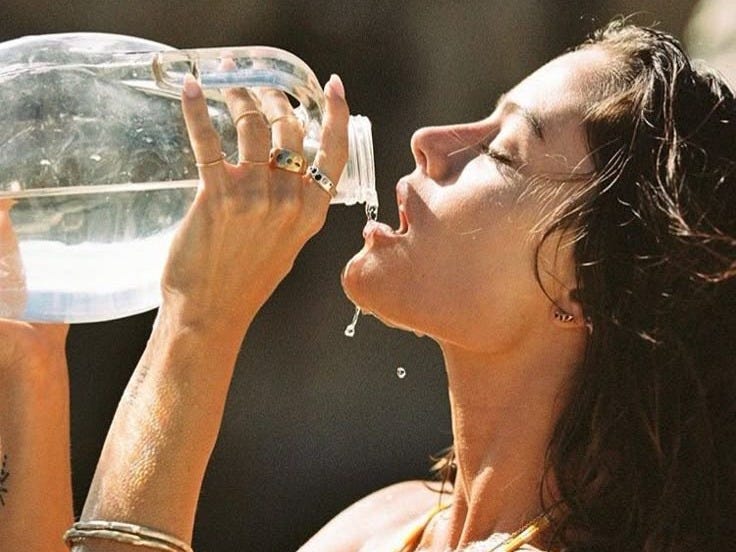
I’ve always been perpetually thirsty. Regardless of whether I just had a drink. I always seem to be on the precipice of severe dehydration. Imagine how bad that got during pregnancy and now breastfeeding. Very thirsty.
This led me down a rabbit hole of hydration.
Why are electrolytes suddenly supremely popular? Why has the slogan “a better way to hydrate” been used in at least 20 water company campaigns in the past year? Are we all breastfeeding? Or is water suddenly not cutting it?
As a matter of fact, is water the best way to hydrate? Let’s talk about it.
Why humans drink water
I know you know that “the human body is 50-70% water” because we learned that in high school biology. It’s pretty easy then, to assume that the reason we drink water is to continue all of those essential bodily functions that require an abundant supply of water — like nutrient transport, waste removal, joint protection, etc.
But what you may not know is that, as this 2021 Scientific American article put it, “human evolution led to an extreme thirst for water.”
Why?
Because humans evolved to lose water at an extreme rate. And survive anyway.
As our ancestors moved out of shaded forests and into hotter, more open environments, they became endurance specialists. We lost body hair, developed an unusually high density of eccrine sweat glands, and adopted a body shape better suited for dumping heat.
Sweating became our competitive advantage. It allowed us to stay active under the sun long after other animals had to stop.
But sweating comes with a cost: water loss. Lots of it. A whole bunch of very thirsty hunter guys n gatherer gals.
In fact, we humans are far more vulnerable to dehydration than many other mammals. Lose around 2% of body mass as water and cognitive and physical function rapidly begin to break down. If it reaches 10% of water lost, you’re cooked. (Or would we say you’re dehydrated? like a dehydrator machine… get it?)
A 2013 study found that just 1% body water loss (not much) can impair cognitive performance, leading to symptoms like dizziness, confusion, impaired coordination, and reduced motor skills. 10-12% is considered life-threatening. Enough said.
Unlike camels, we can’t store water in our humps. Our kidneys can conserve water only to a limited extent. Which is why, if we chug water, we risk diluting our electrolytes and doing real harm.

That’s the real kicker: as the researchers concluded in that 2013 study I linked above:
“Dehydration develops from inadequate fluid intake or excessive fluid losses, and overhydration can result from excessive water (or fluid) intake with or without proper electrolyte replacement.”
So basically, if you drink too little or too much, you’re fucked.
What’s a girl to do?
How to hydrate properly
More isn’t better, first of all.
The reason I’m always thirsty (don’t worry, I got tested for type I diabetes — a common cause of perpetual thirst lol — I’m in the clear), is probably because I got into a cycle of chugging water, thinking I was getting ahead of the inevitable thirst.
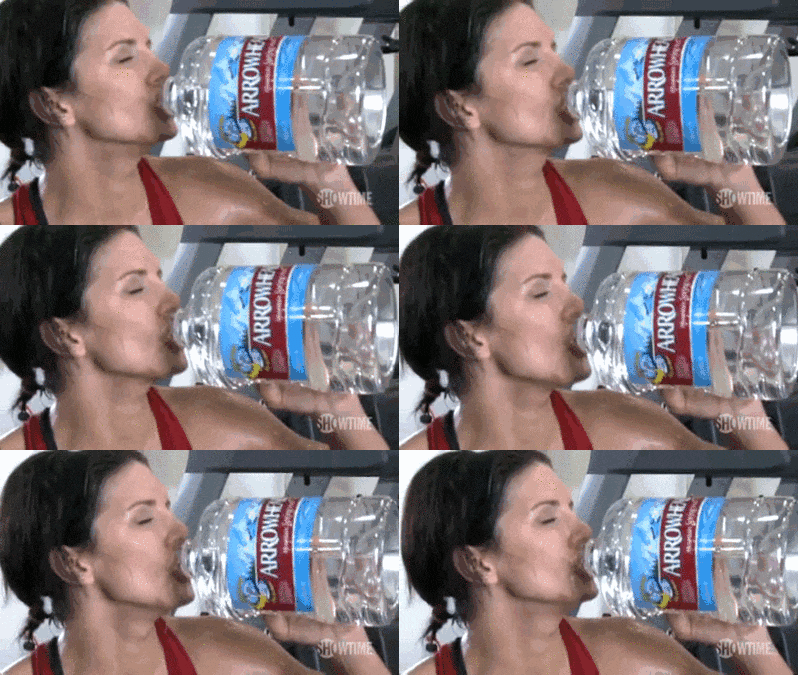
In reality, I was just diluting my electrolyte stores and throwing myself off the clist. Committing myself to a miserable life of thirst.
Humans did not evolve to hydrate on plain water alone. (saying “plain” water makes me think of those kids who say they hate water because they only drink sunny D and other should-be banned substances). Anyway. I digress.
For most of human history, water was bundled with foods and naturally mineralized sources.
Take the Tsimane’ of the Bolivian Amazon, described in the 2021 Scientific American piece I referenced at the beginning. Up to 50% of their total water intake comes from food, not liquids. Papaya alone contains ~90% water plus potassium, magnesium, and small amounts of sodium — exactly the electrolytes needed to retain fluid.
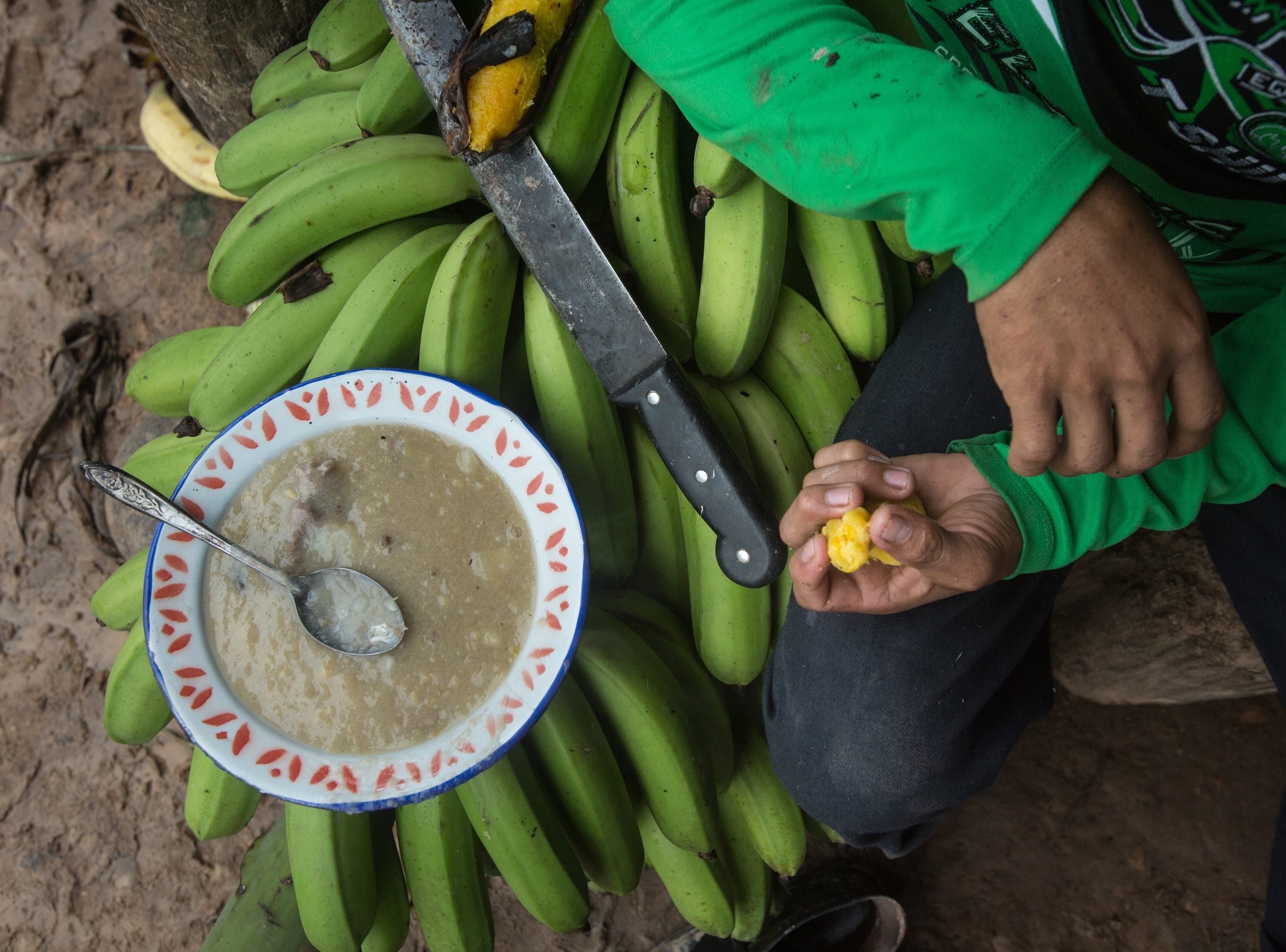
A typical cup of chopped papaya contains about 4.5 fluid ounces of water. That’s not nothing!
Or look at traditional pastoralist diets.
Milk is ~87% water, but it also contains sodium, potassium, calcium, lactose (a carbohydrate), and fat — meaning the fluid is absorbed slowly and retained.
The Daasanach of northern Kenya historically hydrated largely through milk rather than plain water, which is far more efficient in hot, arid environments.
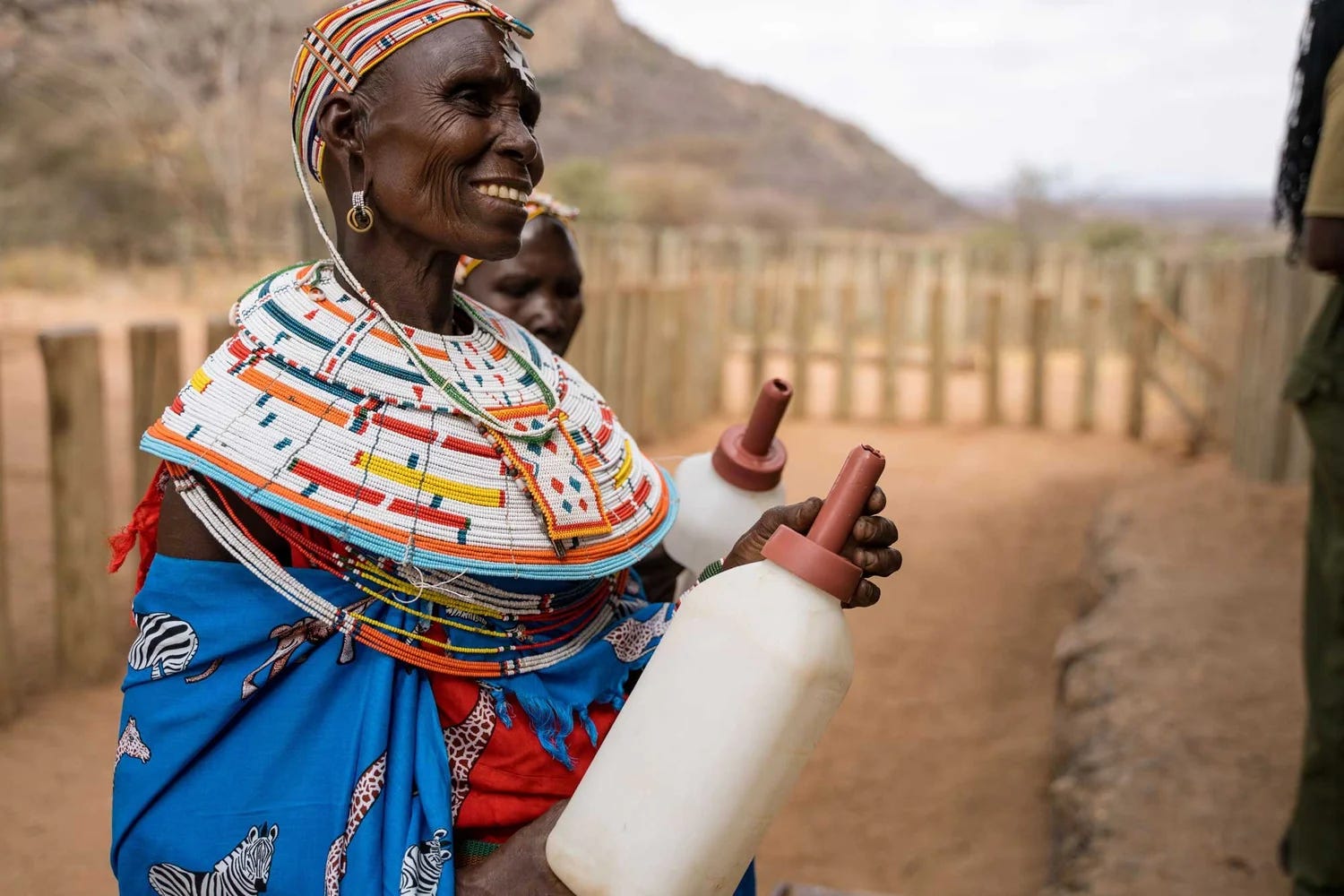
Even plant-based hydration followed this pattern. Wild fruits, tubers, and roots don’t just contain water — they contain osmolytes that help water move into cells instead of straight through the kidneys.
And many societies relied on low-alcohol fermented drinks (like chicha made from cassava or yuca) because fermentation killed pathogens and preserved electrolytes (oh and amazing for gut health but that’s by the by).
The key: these drinks weren’t just safer than “plain” untreated water, they were more hydrating. Thus, you need less of it.
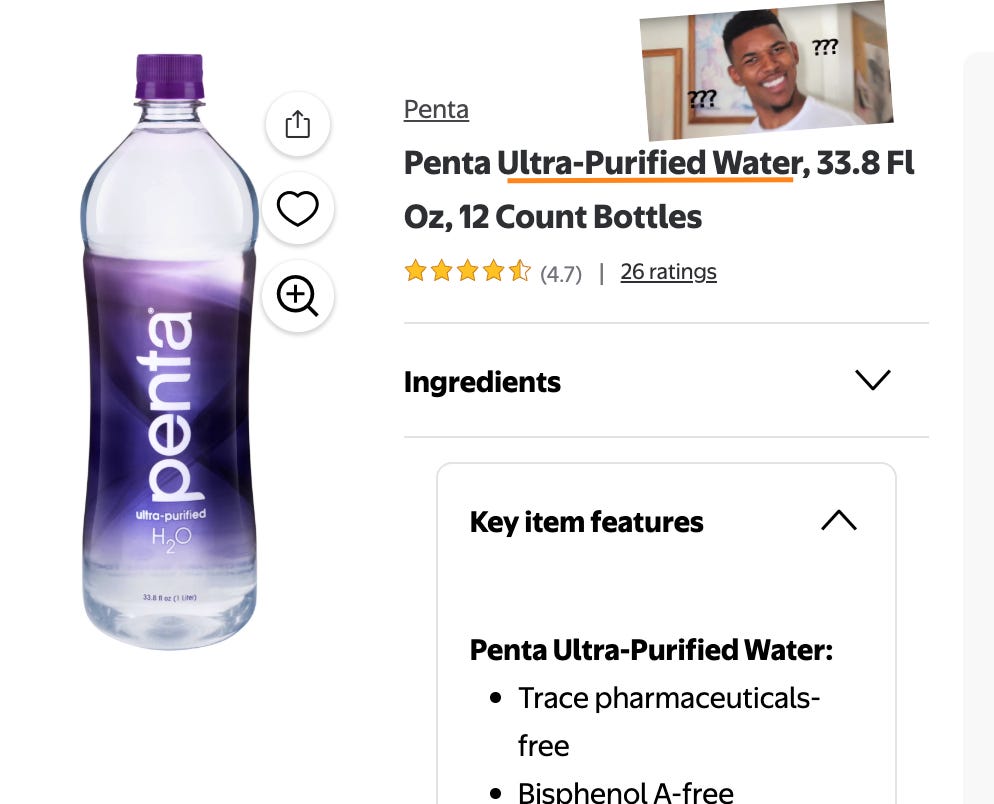
Contrast that with modern hydration: ultra-purified water, stripped of minerals, none through food. Evolutionarily speaking, the way we’re drinking right now is the anomaly across human evolution.
The obsession with staying hydrated
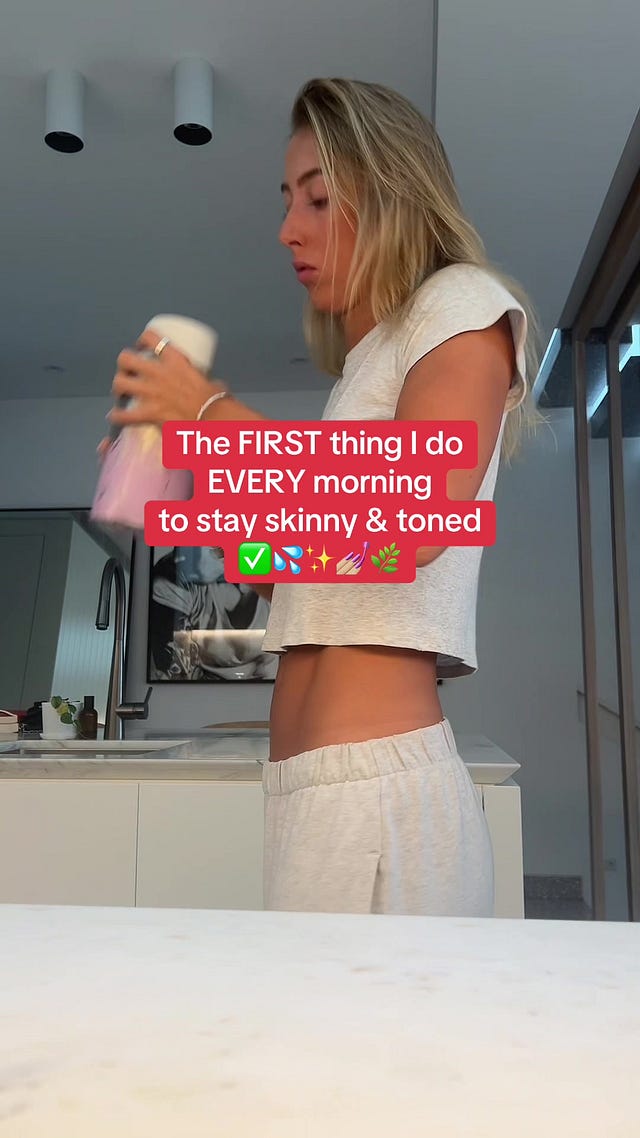
As a girlie in the wellness industry, I’ve definitely unknowingly bought into the desire to stay hydrated as a way to “debloat,” to rid myself of stomach fat, to inhibit hunger (HuNgER FeeLS LIkE tHIrSt YoU knOW?!!?!”🥴), to get glowing skin, etc, etc.
 Tiktok failed to load.
Enable 3rd party cookies or use another browser
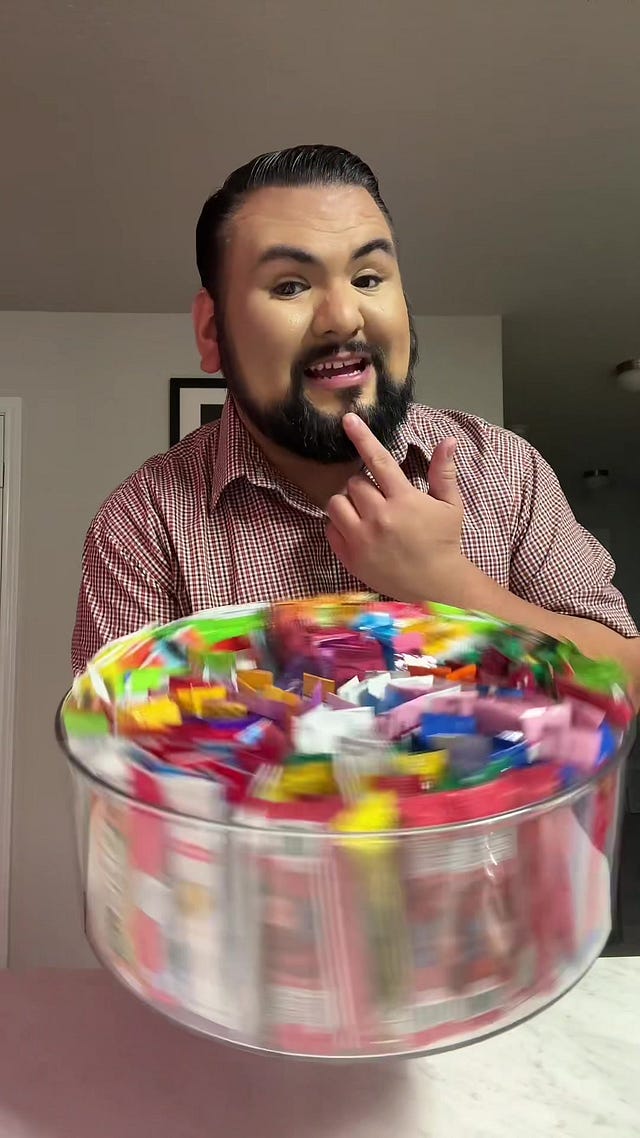
I mean LORD there are literally thousands of “#watertok” videos on TikTok — people snazzying up their water with weird colorings and chemical flavorings. Drinking water, WATER, has become a cool thing to do. A wellness signal. A cue that I’m ‘bout that hydration life. But the real question: Are you still thirsty????
 Tiktok failed to load.
Enable 3rd party cookies or use another browser
(respectfully what the fuck)
That’s why even I, in the desire to be in optimal health, contributed to the hydration industrial complex. It’s a $1.5 billion business. “What is? Water” No literally just the electrolyte market. WILD, considering that in 2026, many individual countries achieving near-universal access to clean drinking water (of over 99%).
So what’s the issue? Why are we spending billions of dollars annually on “better hydration”?
Well, firstly, the electrolyte companies saw the gap in the market: water — these days — isn’t great.
Liquid I.V. launched in 2012, initially targeted toward hardcore athletes recovering from a tough workout. The flavored powder mix is marketed as a healthier alternative to sugar-filled sports drinks, with the potion containing salt, vitamins and electrolytes that support rapid hydration.
Fair, totally fair.
Unilever bought Liquid I.V. in 2020, which is when they decided to broaden their horizons. Their marketing switched from hardcore athletes to average Joes and Janes who’ve got a dollar to spend and a near fear unlocked: the possibility of being unknowingly thirsty, and the dominoes of damage it’s probably having on their weight, skin, and vibe.
From there, the brand’s distribution doubled, and the product has expanded the number of flavors. Of course it did. Money.
The brands want to make money by unlocking the fear of potential dehydration.
The consumers want to drink the electrolytes because they want results faster (Pedialyte’s literal slogan is “hydrate and feel better fast”).
They want novelty (electrolytes make water taste good and they’re a fun addition).
And they want to actually feel better, because lord knows if you’re eating the standard American diet (a diet that’s not just in America, contrary to the name), you’re feeling like crap. Guaranteed 💯.
How much water people actually get from food (and why it’s dropped)

In industrialized countries, people now get only about 15–20% of their total water intake from food. That figure comes from dietary intake data used by the U.S. National Academies and European food safety authorities.
Historically, that number was much higher.
In populations eating minimally processed diets — high in fruits, vegetables, tubers, soups, and fermented foods — 30–50% of daily water intake came from food.
Among the Tsimane’, it’s closer to 50%. In Japan, despite lower total fluid intake, roughly half of hydration still comes from food.
The modern Standard American Diet (SAD) flipped this ratio.
Ultra-processed foods are calorie-dense and water-poor. Crackers, protein bars, bread, cheese snacks, cereals — almost no water, almost no electrolytes. No bueno.
That’s why a large proportion of Americans are actually chronically underhydrated.

Depending on the definition used, studies estimate that 20–30% of adults show biomarkers consistent with dehydration — typically elevated urine osmolality or concentration — even while having regular access to water.
Among older adults, that number can exceed 40%.
Among pregnant and breastfeeding women, dehydration risk is even higher due to increased fluid turnover (I can relate. It’s roughhhh).
This isn’t because people are stupid or forgetful. It’s because modern hydration advice assumes:
hydration = drinking water
thirst = reliable signal
water quality and composition = irrelevant
None of those assumptions hold up biologically.
If most of your water comes stripped of electrolytes, and most of your calories come stripped of water, you end up chasing hydration instead of achieving it. Mic drop baby.
Why Americans don’t trust tap water (and when that fear is justified)
It’s impossible to talk about hydration without talking about water quality — especially in the US. Just to be clear, I am not American, but I did study do my bachelor’s degree about nutrition status in the US and then live in California for seven years. And I’m a legal permanent resident so… do with that what you will.
For many Americans, the shift away from tap water wasn’t actually a silly wellness trend. It was a trust rupture.
Events like Flint, Michigan, permanently altered the collective perception of “safe” drinking water. Lead contamination, institutional denial, and delayed accountability did real damage to real people. It’s appalling. Watch this video to learn more about the devastation:
And Flint wasn’t isolated. Reports of PFAS (“forever chemicals”), agricultural runoff, aging infrastructure, and inconsistent municipal oversight have made skepticism rational in many regions.
Fortunately, I now live in Europe. In most of Europe, tap water quality is high, tightly regulated, and mineral-rich. In many Europeans regions, tap water naturally contains calcium, magnesium, and bicarbonate — making it closer to what humans historically drank. Thus, drinking “plain” water is probably enough to hydrate you.
(some parts of the US have good water quality but the average person has no easy way to tell which category they fall into, and they probably don’t trust what the officials say anyway because of Flint. right?!)
People who drink bottled water need to know that it has been purified to the point of being biologically empty. Ironically, in trying to avoid contaminants, many people end up drinking water that’s clean but ineffective for hydration unless paired with food or electrolytes.
So should you use electrolytes?
Here’s the key point you need to understand:
Hydration is not about how much liquid you pour into your mouth. It’s about how much fluid your body can retain and distribute — into blood, tissues, and cells — without flushing it straight back out.
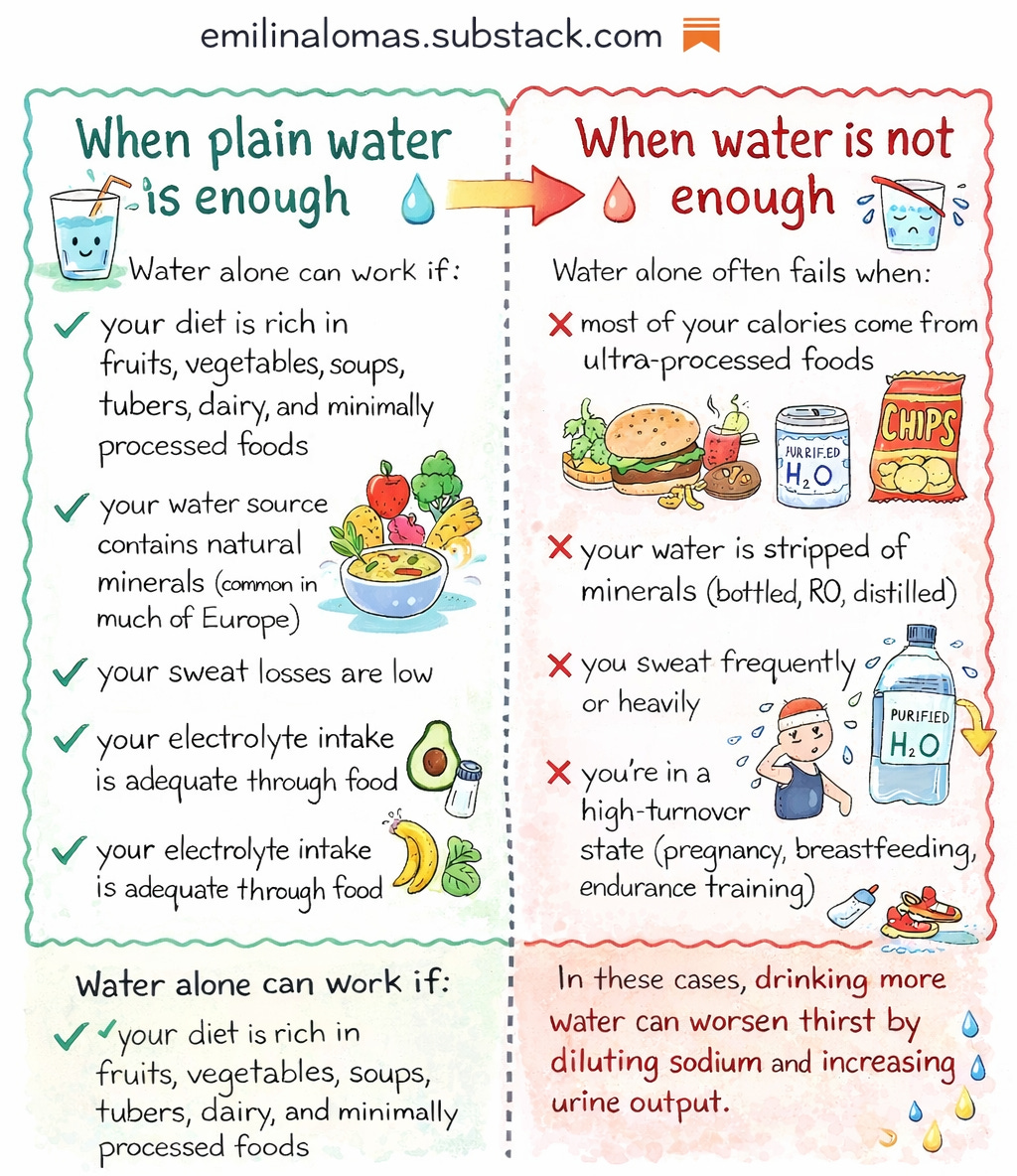
Thus, if you:
eat a diet low in water-rich foods
sweat a lot
drink ultra-purified, alkaline, or reverse-osmosis water (the two OG water cults)
are pregnant, breastfeeding, exercising, stressed, or not sleeping well (im 4 out of 5 do i get an award)
live somewhere hot
or habitually chug water
…then I’d argue yes, plain water alone is an overall poor hydration strategy.
Which minerals actually matter
The issue with some electrolyte products is not the mineral composition, it’s the other shit they add, e.g:
too much sugar (yes glucose helps hydration but Powerade literally contains 21 grams?!!)
other sweeteners like dextrose/maltodextrin
too many B vitamins (this Reddit thread talks about B6 toxicity from Liquid IV!), and;
other ingredients like citric acid, silicone dioxide, and artificial flavorings that are just going to irritate the gut, spike insulin unnecessarily, or create problems that have nothing to do with hydration.
I mean LMNT literally got sued for the amount of shit they put in their “all-natural” electrolyte product.
Once you strip the marketing away, hydration is boringly simple. Only a handful of minerals actually matter.
In order of importance:
1) Sodium (non-negotiable)
Sodium is the primary driver of fluid retention. It’s what allows water to stay in circulation instead of being flushed out by the kidneys.
2) Potassium
Potassium helps move water into cells and supports nerve and muscle function, but it works with sodium, not instead of it. You don’t need huge doses.
3) Chloride
Chloride is almost always paired with sodium (aka salt). It helps maintain fluid balance and acid–base regulation, but you don’t need to think about it separately. If sodium is present, chloride usually is too.
4) Magnesium & calcium — context-dependent
These matter more for muscle function, nerve signaling, and long-term electrolyte balance than for acute hydration. Small amounts can help, especially if your water is mineral-poor, but they’re not the main event for thirst.
You might be like okay so can I just eat a banana? And the answer is… basically yes?!
Certain foods behave like hydration systems:
Fruit
High water + potassium + natural sugars = slow, retained absorption. E.g.:
Papaya (~90% water) – potassium, magnesium
Watermelon (~91% water) – potassium + citrulline
Oranges, berries, kiwi – water + potassium + glucose/fructose
Milk & yogurt
Milk is ~87% water. It outperforms water in hydration studies because fluid stays in the body longer. It crucially contains sodium, potassium, calcium, lactose (a carbohydrate), and protein and fat (slow absorption). Major key.
Soups, broths, and stews
Water + sodium + potassium + food matrix = ideal hydration.
Final words
This is getting really long and I swore to myself I was going to make this a quick read. Damn it. So I’ll put the FAQs below so to not overwhelm the article.
Basically, what you need to know:
Hydration isn’t about drinking more water — it’s about retaining it. Humans evolved to hydrate through water plus minerals and food, not ultra-purified H₂O.
If your diet is low in water-rich foods, your water is stripped of minerals, or your fluid turnover is high (sweat, pregnancy, breastfeeding, stress), plain water alone can keep you stuck in a cycle of thirst.
In those cases, food, salt, and simple electrolytes work better than chugging another bottle.
I hope you liked this deep dive, drop comments if you have them — alternatively (or in addition to) join our subscriber chat (link at the bottom of this post) where we debrief and brainstorm <3
FAQs below.
FAQs: Hydration 101
What is reverse osmosis water — and is it good?
Every wellness girlie added an aluminium tank to their Christmas list under the guise of ✨ reverse osmosis ✨. What’s the deal?
Reverse osmosis (RO) water is water that’s been filtered so aggressively it removes almost everything: contaminants, minerals, electrolytes. Great if you live in Flint. Not exactly necessary if you live somewhere where the government isn’t trying to give you cancer through the water system. Did I just say that?
Anyway, if you are opting for RO to ensure clean drinking water (very fair), try to drink it with meals, or add some minerals/electrolytes. Or (my choice) don’t shy away from adding salt to your food.
How much water should you actually drink in a day?
Annoying answer: it depends. (I know. Sorry.)
There is no universal magic number. Those “2–3 liters per day” guidelines assume:
moderate activity
temperate climate
decent diet
mineral-containing water
If you eat lots of fruits, vegetables, soups, dairy, and whole foods, you’ll need less liquid.
If you eat mostly dry, ultra-processed foods and sweat a lot through exercise or other avenues (hey whatever you’re into), you’ll need more — and to be more smarter about it. (yes I said more smarter).
Does coffee actually dehydrate you?
No <3 Rid yourself of this insidious myth.
Caffeine has a mild diuretic effect if you’re not used to it. Thus, if you chug a venti cold brew on an empty stomach at 6am (you animal) then YES of course it’ll dehydrate you because you’re going to shit your brains out and are still dehydrated from sleep.
Drink coffee. Also drink not coffee.
Do other drinks count toward hydration (like tea)?
Yes. Your body is not a moral judge.
Tea, coffee, milk, soup, smoothies, and even juice all contribute to hydration. In fact, some hydrate better than water because they contain electrolytes, carbohydrates, or fat that slow absorption.
Milk, as mentioned, is the OG hydrater.
How many electrolyte supplements should you have in a day?
Most people do not need electrolytes all day, every day. They’re useful contextually. Personally I take them every day because I’m breastfeeding. If you’re a lazy fuck who just sits around binging netflix then stop reaching for liquid IV you literally do not need it.
One serving makes sense if you:
sweat heavily
exercise
are pregnant or breastfeeding
drink RO or bottled water
feel persistently thirsty despite drinking water
More than one per day is usually unnecessary unless you’re doing endurance activity or losing a hell of a lot of fluid.
Does putting Celtic salt in your water actually help?
Yes. Sometimes. Calm down.
Adding a small pinch of salt to water can:
improve fluid retention
reduce constant thirst
help if your diet is low in sodium or your water is mineral-poor
But before you turn every glass into seawater — if you already eat salted food, the benefit is minimal.

Thank you! Really enjoyed this article and your other ones too. A quick question after noticing your graphics made by chatgpt more recently. Do you use AI to write any of your articles or other parts of your work besides just making graphics? Thanks!
The way I'm obsessed with your writing.